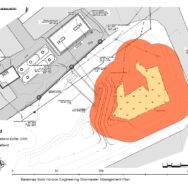
Major Work planned for the Ossipee River Dam next year will likely alleviate flooding to some extent. But because of the geography of the lake, Mother Nature will remain a wild card. This is the last of the articles in our series leading up to the state's public presentation of its plan to replace the dam next year. The meeting is this Saturday, August 25, at 10 a.m. in Freedom Town Hall.
In this 2010 Alliance newsletter article, a state official articulated why the dam needed to be replaced to improve flood protection and prevent a structure failure that would devastate downriver properties. The article is also useful for its recounting of the dam's history.
A long-time resident of Freedom, Ned Hatfield, author of this article, died in July 2017. He was a retired teacher who served his town for a number of years on the zoning board. His deep interest in the lake is evident in this thoughtful article about the environmental implications of winter drawdowns, a topic he felt had not received sufficient attention. We're reposting it, along with other similar articles, to provide context for the August 25th public meeting we're hosting at which the state will present its plan to replace the Ossipee River Dam.
Bob Smart has written often about the Ossipee River Dam, including this newsletter article from 2004 about the dam's history and how it's operated. This is one of a number of articles we'll be reposting in advance of the state's presentation on how it plans to rebuild the dam next year. That public presentation will be August 25 in Freedom Town Hall at 10 a.m.
Ossipee Lake as we know it today was formed by the construction of the Ossipee River Dam more than a century ago. Next year the dam will get a significant upgrade. A public meeting to be held in Freedom on Saturday, August 25, will detail the state's plan.
Early morning hit and run on the big lake has the State Police asking for the public's assistance in providing leads.
Marathon swimmer Mike Welsch has been traversing the state's lakes. This past week he swam Ossipee Lake.
The warning was issued on June 22 after the state collected water samples at the head of the Ossipee River dam. Cyanobacteria are natural components of water bodies worldwide, but blooms and surface scums may form when excess nutrients are available to the water. Potential acute health effects include irritation of skin and mucous membranes, tingling, numbness, nausea, vomiting, seizures and diarrhea. No further blooms have been observed in this area at this time, according to the state.
There could be as many as four loon nests on Ossipee Lake this year, and a handful of volunteers from all points on the lake help keep them safe.
An opportunity to work outdoors, meet people, and help keep invasive plants from entering the lake awaits a handful of lucky individuals who are selected for this year’s Lake Host program on Ossipee Lake.
The dam gates are closed, the water level is rising, and black flies are back. It's almost summer.
This year marks the 100th anniversary of the Migratory Bird Treaty Act, which was signed by President Woodrow Wilson and protects more than 1,025 species. All other legislation pertinent to the safety of our native birds is amended to this important bill, which reflected the plight of avian life in those times. The Act ended the millinery trade, which was selling feathers from egrets and the like, making such ornamentation a societal no-no.
NEWSLETTERS >